Search here
 Log In
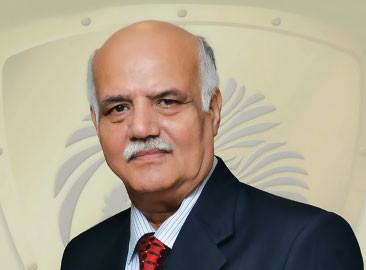
Co-founder and CEO - Global Trade Matters | MD Global Trade Matters - Business Advisory Services | President CEO CLUBS Egypt Chapter | Secretary General - AEBA
Work-life balance is not about choosing one priority; it’s about setting boundaries between all of them
1. You’ve studied in both Switzerland and the United States, two very different environments. How did those experiences shape the way you think about leadership and global business today?
I was actually born in Beijing, China… my father was an Egyptian diplomat and ambassador. Throughout my life, I studied and lived in many countries, such as Cyprus, Malawi, Australia, Egypt, Togo, Italy, Canada, the United States of America, and Switzerland, not to mention the many other countries I visited throughout the journey of my life. I had a wonderful opportunity provided to me by my parents, giving me a global perspective rooted in understanding and tolerance through exposure to so many diverse cultures and people. I think this was the main catalyst for my understanding of the true meaning of globalization and the concept of a global village.
2) Looking back at your years at Franklin University and Pace University, what lessons or moments have stayed with you and influenced your career path the most?
Both universities were amazing educational institutions despite their differences. When we talk about Franklin University in Lugano, Switzerland, it was a much smaller school with fewer than 300 students, and hence, we had very close relationships and excellent access to our professors. The student body and academic staff were very diverse in terms of background and nationalities. We could have classes with fewer than six students. The overall atmosphere and the environment of a small city like Lugano were just amazing. We would have lunch with our professors and even the dean of the university in our Grotto on campus. We were in the center of Europe, so cities like Como, Milan, and Paris were only a drive away. We also had a great Academic Travel program where we traveled together around the world to visit countries like Japan, Germany, the US, Kenya, Belgium, and many more, where we had special meetings with the United Nations, NATO, SONY, CNN, Bank for International Settlements, Caterpillar, Cartier, NASDAQ and so many more and had the privilege of meeting and talking to some of the most senior diplomats and executives in these organizations. Certainly, meeting such people has left an amazing impact on myself and my colleagues and inspired us greatly. As for Pace University’s Lubin School of Business in New York City, it had thousands of students, and the experience was intense. They were two totally different experiences. Studying in New York at the heart of the global financial center was a privilege, and the internship opportunities opened my eyes to the true nature of how global business is conducted. I studied Global Strategic Management, so the combination of Lugano and New York was just the perfect match.
Sharing knowledge is not about dictating; it’s about giving the next generation time and patience
3. Global Trade Matters has grown into one of Egypt’s most respected private sector think tanks. What originally motivated you to co-found it?
Global Trade Matters was founded in Egypt back in 2005 as the first private sector think tank for economic reform. The motivation behind the concept was to support the private sector in developing a better understanding of the impact of bilateral and multilateral trade agreements that the Egyptian government was signing and advocating. We wanted to bridge the gap in understanding between the government and the private sector and enhance private sector participation in the concept of the global village. I am a strong advocate of globalization and free-market economics. In 2005, the WTO changed its regulations, and the world was going through a new transition, so Global Trade Matters became a platform to navigate that change.

4. As the organization evolves, what impact do you hope Global Trade Matters will have on Egypt’s economic and political landscape in the coming years?
I am so proud to say that since 2005, we have been able to make a very positive impact on global trade for the Egyptian private sector, connecting local and international stakeholders, non-governmental organizations, civil society, governments, and the private sector. Today, as the global economy changes and the rules of protectionism seem to be the driving force of international cooperation, we still hold to our principles, always supporting international cooperation, and we advise our members and clients that breaking boundaries, rather than building walls, will be the best way forward for the global community.
5. From your perspective, how should private sector think tanks contribute to shaping policy and national development?
There is no doubt that in this era of digitization, technology, and social media, reaching a wider audience has become much easier, and hence, information flow has become more confusing for many, especially small businesses. Again, we are now witnessing that larger economies that once advocated globalization are pushing for more tariffs, barriers, and the concept of protectionism, not to mention that many think tanks are contributing to the politicization of free markets and global economics. Every think tank has some kind of agenda. My advice is to stick to your principles, regardless of that agenda, and that we are here to ask the right questions, not to come up with the right answers.
6. As the leader of the Egypt Chapter of CEO CLUBS, how has this role deepened your understanding of the impact of elite business networks on national development? What core benefits does it offer Egyptian leaders, and which leadership principles from this experience still guide you today?
It seemed like a natural collaboration when we were introduced to Joseph Mancuso (late), the founder of the CEO CLUBS. We found that we had the same principles and goals, and adding Egypt to the network was going to be of mutual benefit for both organizations. He was a special man and had worked tirelessly to put the network together and bring so many CEOs from around the world under the notion of “making money while having fun and learning”. He remains an inspiring figure. We invited Joseph Mancuso, his wife, and his daughter in addition to many members of the CEO CLUBS, to Egypt twice, and we were happy to continue the concept and principles of Global Trade Matters by expanding our global network with the CEO CLUBS. The man had a certain “magic” and a wonderful charisma. In the meantime, he was what we call “old-school”, but then picked a group of amazing CEOs to think forward and into the future to keep this organization growing and following in his footsteps and preserving his legacy. I am proud to be part of this story and appreciate working with Muhammad Ijaz, who has now taken over the helm of the CEO CLUBS. The network of CEOs not only brings businesses together but also creates true friendships and a sense of family.
7. You served as an advisor to former President Adly Mansour during a critical moment in Egypt’s history. What was the most challenging part of that responsibility for you?
It was a privilege and an honor to have had the opportunity to be part of Interim President Adly Mansour’s advisory team at a very challenging yet exciting time in Egypt’s recent history. Walking into the Presidential Palace, meeting him, speaking with him, and discussing with him and the rest of the team the future of our country was one of the most memorable experiences of my life. Coming from a diplomatic family, I have learned that even the smallest contributions are those that result in the biggest change. The most challenging part is that this group of young advisors was tasked with discussing what was called the “Map of the Path” …how the country (Egypt after the two revolutions) will move forward, and how we could structure the next steps. What comes first? A new government, presidential elections, parliamentary elections, or a new constitution? He was the Chief Justice of the Supreme Constitutional Court of Egypt, and this was reflected in all his thoughts, ideas and advice, and inspiration. I have the greatest respect for him, with all my heart.
Breaking boundaries, not building walls, is the only sustainable path forward for the global economy
8. Throughout your 30-year career, what challenges have had the biggest impact on shaping who you are as a leader?
Work-life balance has been the most challenging issue in my career. Over many years, I have had the opportunity to lecture many students, junior and senior corporate and government executives, and officials about communications and interpersonal skills, where we talk about and discuss the challenges of “work-life balance” and how to be able to manage family, work, career, colleagues, friendships, and even your pets. No matter how much you try to focus on one, you cannot ignore the other parts that make you who you are and are part of your responsibility and personality. I think it’s about setting boundaries between all. But again, you should mentor those around you who have multiple responsibilities, and they need to understand that life is relative, so people need to respect your time and space (E = mc2). The people in your life need to support you.
9. What would you say is your strongest professional quality, and how has it helped you become a connector between local and global stakeholders?
I have to relate this to my background, upbringing, and education. Coming from a diplomatic family, I have learned that you need to respect opposing ideas, diverse cultures, and even differences. We do not live in a vacuum. Put yourself in other people’s shoes. Always stick to your principles, yet never be afraid of changing your mind. Agree to disagree. Listen and learn from other people’s experiences… You never know what comes out of it. Most importantly, it is essential to understand that despite someone’s sincere and best intentions, they can do more harm than good.
10. After so many years in executive leadership, what continues to motivate you and keep you passionate about your work?
Sharing knowledge and the experiences I have gained. The older I get, the more I feel that I have something to share with the new generation. I do not dictate but just share. There is nothing more moving and inspiring than watching young students and new colleagues being interested in something you are saying, or asking you questions, and being curious. I love them regardless. Some are really dedicated, and others are present but still finding their direction. A simple conversation can change a person’s life, and I think it is our obligation as global leaders to give them time and patience.
Elite business networks don’t just create deals; they create trust, friendship, and long-term impact
11. AEBA now connects Egypt to more than 28 Asian markets. How do you see this network creating new opportunities for Egypt’s future?
I was kindly asked to become the Secretary General (SECGEN) of AEBA back in 2012 by a wonderful and amazing group of CEOs, such as Karim Helal, Essam El Wakil, Mohamed Abou Hashish, and Urs Moll, supported by the Asian Ambassadors in Egypt. Since then, I can attest that the support Asian countries, companies, and governments have given to Egypt in trade, investment, and culture has had a truly positive impact on our economy. Since then, Asian investments in Egypt have grown exponentially. In the meantime, the Egyptian presidency and government have reached out to our partners in Asia to create a new global dynamic of cooperation, peace, and development. Asian partners have taken the risk at a time when others were skeptical, and that is something that has paid off for our partners in Asia and had a significant impact on bilateral, multilateral trade and investment relations between Egypt and our partners across Asia.
12. You’ve maintained strong relationships with Swiss companies and institutions for many years. How have these global connections influenced your strategic thinking?
Having had the privilege of being educated in Switzerland, I find it a fascinating country and wonderful people. Switzerland has long been recognized as a global hub for quality, creativity, innovation, precision, sustainability, and industrial excellence. One cannot help but be fascinated by what the Swiss have achieved and learn from their transition from a poor rural economy to a world leader in so many sectors, despite being a small landlocked nation. Egypt is home to some of Switzerland’s largest companies, with billions invested in a multitude of strategic sectors, such as food and beverage (F&B), medicine & pharmaceuticals, agribusiness, and industry. Over the past years, I have had the honor to work with the Swiss Embassy and government organizations in Egypt, the Swiss Chamber of Commerce, Swiss educational institutions, think tanks, and private sector companies to continue building on a longstanding friendship and growing economic partnership between Switzerland and Egypt. There is no doubt that I am strongly influenced by the Swiss school of strategic management and business thinking, and I try to apply many of these ideas in the way I run my businesses.
13. As you look ahead, what global trends do you believe will shape competitiveness and economic transformation in the MENA region?
Two things come to mind: peace and education. In a region where we have more conflicts than any other place in the world, peace, security, collaboration, and cooperation will be the key to true sustainable economic growth and development. Education would be the second thing we need in our region. We have a large population of young minds and high population growth in most of the MENA region countries, and for us to become more competitive regionally and globally, we have to focus on providing stronger and more affordable higher and technical education and opportunities to ensure that our youth are both more creative and innovative. Another thing that comes to mind is connectivity, not only for the MENA region but also for Africa. As an African country, we believe that the future is the untapped talents we have in our continent. Intra-African trade connectivity can, should, and will unlock and unleash so much growth in so many sectors, not just for Africa but also globally. But again, without peace in the region, this potential is hindered, and many younger people will miss out on so many possibilities and opportunities for a better future.
14. Lastly, what message would you like to share with EVOLVE readers and the business community?
Come to Egypt! Come to Egypt to visit our amazing history and our new Grand Egyptian Museum. Come to Egypt and see more than 24 new cities we have built, including an impressive New Capital City. Come to Egypt and enjoy the fusion of our culture. Come to Egypt and tap into the amazing investment opportunities in our capital markets, financial sector, our growing ports, and transport infrastructure. Come to Egypt and take advantage of our free customs access to global markets and billions of consumers around the world through our bilateral and multilateral trade agreements and protocols. Come to Egypt and explore one of the fastest-growing real estate investment markets in the world. Come to Egypt and tap into the amazing pool of young, educated talent to help build your global business capacity. Come to Egypt to enjoy our beaches and sun-filled summers and warm winters. Come to Egypt and meet me, make new friends, and explore new business opportunities. Come to Egypt, “Make money, have fun, and learn”.