Search here
 Log In
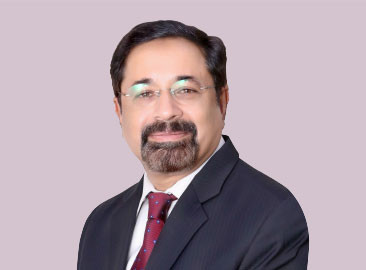
CEO – Hyundai Nishat Motor.
Pakistan deserves access to the same technologies, experiences, and opportunities available in global markets, and we must be the ones to make that happen from within
1. How did your early roles and any international exposure—such as education, training, or partnerships—shape your ability to lead a major venture like Hyundai Nishat Motors and influence your global business perspective?
My early professional journey was shaped by a deep exposure to the core fundamentals of business discipline, resilience, and a commitment to long-term value creation. Being part of the Nishat Group, I had the opportunity to learn firsthand how legacy businesses evolve through strategic risk-taking and disciplined execution. International exposure, both academic and through cross-border business partnerships, helped broaden my worldview. It taught me that success in today’s market requires more than operational excellence; it demands adaptability, innovation, and a deep understanding of global dynamics. Interacting with partners from South Korea, Japan, and the Middle East provided insights into diverse leadership styles and evolving consumer expectations. Leading Hyundai Nishat Motors required uniting global standards with local insights. Our collaboration with Hyundai Motor Company and Sojitz Corporation was not just transactional; it was a shared vision to introduce world-class mobility solutions in Pakistan. My international experiences provided me with the cultural fluency and strategic clarity to bridge that vision locally. Ultimately, it’s this fusion of legacy with learning, and local relevance with global excellence that shaped my leadership at HNMPL.

2. As a second-generation business leader, how have you balanced legacy with innovation within the Nishat Group?
Balancing legacy with innovation has been one of the most meaningful aspects of my journey. The Nishat Group has a long-standing reputation built on integrity, stability, and consistent value creation. These foundational values are non-negotiable; they anchor our identity and guide how we operate across industries.
However, sustaining that legacy in a fast-evolving world requires a mindset of renewal. I’ve always believed that honoring tradition doesn’t mean resisting change; it means evolving with purpose. Within the Group, we’ve focused on modernization efforts in areas like digital transformation and new business verticals, including automotive, energy, and infrastructure.
Hyundai Nishat Motors, in particular, is a manifestation of this philosophy. It’s a bold move into a high-tech, future-oriented industry that aligns with Pakistan’s industrial growth and shifting consumer aspirations. The ability to partner with global brands, embrace new technologies, and build new ecosystems without compromising our core values is where legacy meets innovation. Ultimately, it’s not about choosing one over the other. It’s about creating a culture where the wisdom of the past empowers the ambitions of the future.
Honoring tradition doesn’t mean resisting change; it means evolving with purpose

3. Were there any turning points or challenges early in your career that significantly influenced your path to executive leadership?
Every career has defining moments, but for me, the early challenges taught lessons that no textbook or boardroom could. One of the most significant turning points came when I was entrusted with responsibilities that had high stakes and required me to step outside my comfort zone. Leading projects where outcomes impacted not only the business but also hundreds of employees taught me how decisions must balance performance with people.
A particularly testing period was during the COVID-19 pandemic, when global supply chains were severely disrupted. Our suppliers experienced delays, and the broader uncertainty placed pressure on planning and timelines. Despite these circumstances, we ensured that customer commitments remained a top priority. Through operational agility, proactive communication, and cohesive teamwork, we were able to manage the situation effectively and continue delivering vehicles without compromising on customer expectations. It was a phase that demanded clarity, speed, and a solutions-oriented mindset. What influenced me most was not a single event, but the consistency of challenges that pushed me to grow. I began to value clarity over complexity, and long-term outcomes over short-term wins, principles that continue to guide my leadership.
4. Why did Hyundai choose Nishat Group as its partner in Pakistan, and how has this partnership evolved since its inception?
Hyundai was looking for a partner in Pakistan that not only had strong local market knowledge but also the financial strength, operational depth, and long-term vision to build a sustainable business. The Nishat Group met these criteria with a diversified portfolio, a legacy of successful industrial ventures, and a reputation for disciplined execution.
What stood out was our alignment on values. Hyundai wanted a partner that could uphold global standards while understanding local nuances. With our experience across sectors like textiles, power, cement, and banking, we brought a unique combination of business credibility and executional capacity. Our Group’s deep roots in Pakistan’s economy and Hyundai’s global mobility expertise created a partnership that was both complementary and future-focused.
Since its inception, this relationship has grown from a joint venture into a long-term strategic alliance. We’ve launched a total of 8 CKD models, with our latest being the hybrid Tucson, and laid the foundation for future mobility technologies in Pakistan. The partnership is built on mutual respect, knowledge sharing, and a shared ambition to raise the bar for automotive excellence in the country. It’s a collaboration that continues to evolve as both companies look toward the next phase of mobility.
Introducing models like the IONIQ 5 and IONIQ 6 marked the beginning of our long-term electrification roadmap in Pakistan
5. Looking at your 50,000th vehicle milestone in 2025, how has production scalability been managed while maintaining quality?
Reaching the 50,000th vehicle milestone is not just a number—it reflects the trust of our customers, the resilience of our teams, and the strength of our systems. From the very beginning, our focus at Hyundai Nishat Motors has been on building a production setup that combines scalability with precision. We invested early in a purpose-built, state-of-the-art plant designed with Hyundai’s global manufacturing standards in mind. This gave us a strong foundation to scale efficiently without compromising on quality. As volumes grew, we systematically expanded our capabilities improving line balancing, adding automation where needed, and enhancing supplier coordination.
At the same time, quality has remained non-negotiable. We follow Hyundai Motor Company’s global quality assurance protocols, with continuous monitoring and regular audits. Our teams are trained to adhere to international best practices, and our internal feedback loops ensure that quality is reinforced at every step from parts procurement to final inspection.
This milestone is a result of planning, discipline, and teamwork. We’ve proven that localized production can deliver world-class vehicles, and we’re confident that as demand grows further, our systems are ready to scale with the same rigor and reliability.
Quality for us is non-negotiable. Our responsibility is to bring the future closer for our consumers
6. What is the core mission and long-term vision you envisioned when launching Hyundai Nishat in Pakistan?
When we launched Hyundai Nishat in Pakistan, our mission was clear: we wanted to bring cutting-edge Korean automotive technology to the country and offer customers access to premium, locally assembled vehicles. At the time, there was a clear gap in the market for products that combined international quality with local accessibility, and we set out to bridge that.

We also wanted to lead with industry-first initiatives. Hyundai Nishat has introduced the first and only locally assembled D-segment sedan in Pakistan, the Hyundai Sonata. We followed that by launching the first-ever D-segment hybrid SUV, the Santa Fe Hybrid, and the first locally assembled C-segment hybrid sedan, the Elantra Hybrid. These milestones weren’t just commercial decisions; they reflected our vision of setting new benchmarks for the market.
Our long-term vision is to continue introducing the latest models from Hyundai’s global lineup and to make them available at international standards of safety, comfort, and innovation. We see ourselves as not just vehicle assemblers, but as enablers of global mobility experiences within Pakistan. It’s about raising the bar product by product, model by model, for what the Pakistani automotive consumer can expect and deserve.
7. Many consider you a key figure in Pakistan’s new wave of industrial leadership. How do you personally define leadership, especially in the context of large-scale, cross-sector enterprises?
For me, leadership, especially at scale, is about providing direction with clarity, making decisions with responsibility, and creating the right environment for people to perform at their best. In large, diversified organizations like ours, leadership isn’t about micromanaging every function. It’s about setting a clear vision, putting capable teams in place, and enabling them with the tools and trust they need to deliver results.
Cross-sector leadership also demands a wider lens. Each industry has its challenges, dynamics, and pace. A leader must be agile enough to shift perspectives while maintaining consistency in values and priorities. Whether it’s textiles, power, finance, or automotive, the principles of long-term thinking, operational discipline, and stakeholder value remain constant.
Most importantly, leadership is not static. It evolves with circumstances. At times, it requires decisiveness; at others, patience. It means taking responsibility in tough times and giving credit in good times. For me, it’s about building institutions that last and making sure every decision contributes not just to business growth, but to national progress and institutional integrity.
8. As someone leading transformation in a legacy business family, how do you balance the weight of tradition with the demands of innovation?
In a legacy business family, tradition is not a constraint; it’s a foundation. It gives you identity, values, and credibility built over decades. At the same time, innovation is essential for relevance. Balancing the two is less about compromise and more about evolution. We don’t innovate for the sake of disruption. We innovate where it adds long-term value, whether that means entering new industries, adopting smarter systems, or aligning with changing consumer expectations. The goal is to stay ahead while staying grounded. Tradition offers us the principles to operate with discipline and integrity; innovation allows us to adapt and grow in a changing world. Take Hyundai Nishat as an example; it represents a forward-looking shift in a Group historically known for textiles, cement, and finance. Yet the underlying values remain the same: commitment to quality, long-term planning, and responsible growth. Ultimately, I see tradition and innovation as partners. One provides roots, the other gives wings. The key is to honor the past without being limited by it, and to build the future without losing what made us strong in the first place.
9. Can you describe specific emission-reduction strategies in your production and supply chain?
Sustainability is becoming a core focus of responsible industrial growth, and at Hyundai Nishat, we’ve taken steps to align our operations and product strategy with global emission-reduction goals. On the production side, we’ve invested in energy-efficient systems and continue to optimize plant operations to reduce our environmental footprint. Waste management protocols, responsible water usage, and emission-conscious logistics planning are also part of our ongoing operational practices. We work closely with local and international suppliers to promote environmentally sound materials sourcing and logistics planning.
But where the biggest impact lies is in our product lineup. Over the past year, we’ve significantly shifted our focus to hybrid and electric mobility. A large part of our locally assembled portfolio is now hybrid, starting with the Elantra Hybrid, Tucson Hybrid, and Santa Fe Hybrid. These vehicles drastically reduce emissions compared to conventional internal combustion engine models, while offering better fuel economy to customers. In addition, we also introduced two fully electric vehicles in Pakistan, IONIQ 5 and IONIQ 6, setting the tone for the country’s EV future. These efforts reflect our commitment to not just reducing emissions, but also leading the shift toward cleaner mobility in Pakistan.
We see ourselves not just as assemblers of vehicles, but as enablers of global mobility experiences within Pakistan
10. The Sonata N Line and Tucson Hybrid are flagship models for 2025. What consumer trends or market research influenced their launch?
Both the Sonata N Line and Tucson Hybrid were launched in direct response to evolving consumer preferences and detailed market research. The dynamics of the Pakistani automotive market are shifting; consumers are more informed, aspirational, and conscious of fuel efficiency, performance, and features.
We saw a clear upward trend in demand for hybrid C-segment SUVs. With rising fuel costs and growing environmental awareness, customers are looking for vehicles that offer better efficiency without compromising on space, comfort, or technology. The Tucson Hybrid fits perfectly into that space. It brings together the practicality of an SUV with the fuel economy and reduced emissions of hybrid technology. This decision was also backed by the strong sales performance of the Tucson platform, encouraging us to evolve it further.
As for the Sonata N Line, our research highlighted a gap in the market for a sporty, performance-oriented sedan in the local assembly space. Customers wanted something dynamic, powerful, and premium without crossing into luxury pricing. Launching the N Line filled that void. The response has been exceptional, reaffirming that the Pakistani customer base is ready for more emotionally engaging, performance-driven offerings when backed by value and quality.
11. What role does collaboration with global Hyundai affiliates play in your transformation efforts at Hyundai Nishat?
Collaboration with our global partners has been a cornerstone of Hyundai Nishat’s transformation journey. Both Hyundai Motor Company Korea and Sojitz Corporation have been deeply supportive and strategic in their engagement with us. This partnership is not just financial or operational; it's knowledge-driven, forward-looking, and built on mutual trust.
Our shared goal has always been to deliver world-class mobility solutions to the Pakistani market. The expertise and technological leadership of Hyundai Motor Company have enabled us to introduce models that reflect the latest global standards in design, performance, and safety. Our partners have consistently worked with us to localize offerings while ensuring no compromise on quality or innovation. With Sojitz Corporation, the collaboration brings an added layer of commercial and regional insight, strengthening our ability to scale and navigate complex supply chain and market dynamics.
Together, these global relationships have accelerated our ability to launch products like the Tucson Hybrid, Sonata N Line, and IONIQ EVs, reflecting a shared vision to keep Pakistani consumers at par with global automotive trends. These affiliations continue to shape our evolution into a future-ready, innovation-driven mobility company.
True progress is built over time—through consistency, resilience, and the courage to take well-calculated risks.
12. With global shifts towards EVs and sustainability, how is Hyundai Nishat positioning itself for the future?
At Hyundai Nishat, we see the global transition toward EVs and sustainability not as a challenge but as an opportunity to lead responsibly. We are actively aligning our strategy with Hyundai Motor Company’s global vision of a cleaner, smarter, and more sustainable mobility future. In 2024, we made a bold move by introducing two of Hyundai’s most iconic electric vehicles in Pakistan: the IONIQ 5 and IONIQ 6. These EVs reflect the latest in design, technology, and zero-emission driving, giving Pakistani consumers access to cutting-edge electric mobility at par with global markets. This launch wasn’t symbolic it marked the beginning of our long-term electrification roadmap. In parallel, most of our locally assembled lineup is now hybrid, combining internal combustion engines with electric motors. Models like the Elantra Hybrid, Tucson Hybrid, and Santa Fe Hybrid represent our focus on cleaner, fuel-efficient alternatives that are practical for current infrastructure conditions while offering a clear step toward greener mobility.
Our aim is to keep expanding in this direction, introducing cleaner technologies, encouraging consumer adoption, and contributing meaningfully to the country’s transition toward sustainable transportation.
True progress is built over time—through consistency, resilience, and the courage to take well-calculated risks.
13. Looking ahead, how do you envision Hyundai Nishat’s role in shaping Pakistan’s auto industry, especially with electric and autonomous technologies emerging globally?
We see Hyundai Nishat as a catalyst for transformation within Pakistan’s automotive landscape. The global shift toward electric and autonomous technologies is inevitable, and we believe Pakistan must prepare to integrate these trends into its industrial and consumer base.
Hyundai Nishat has already taken meaningful steps in this direction. Our introduction of the IONIQ 5 and IONIQ 6 in 2024 marked the first time globally renowned EVs of this caliber were made accessible in the local market. We’ve also transitioned much of our CKD lineup toward hybrid technology with the Elantra Hybrid, Tucson Hybrid, and Santa Fe Hybrid, offering fuel-efficient and low-emission alternatives that are well-suited to Pakistan’s infrastructure today.
As autonomous technology evolves globally, we aim to keep Hyundai Nishat positioned at the forefront of innovation—ready to introduce intelligent driving solutions once the regulatory and infrastructure landscape in Pakistan matures. In fact, many of our current models already feature advanced driver assistance systems (ADAS), offering greater safety, comfort, and semi-autonomous functionality. Our goal is to lead responsibly, introducing advanced technologies with the right timing and relevance, so that Pakistani consumers are not left behind in the global mobility revolution.
14. What’s one achievement at Hyundai Nishat that you're most proud of, and why?
One of the achievements I’m most proud of is reaching 50,000 units of local production in a record time of just six years. This is a remarkable milestone, especially considering the macroeconomic challenges and evolving industry landscape in Pakistan. It reflects not only the scale of our operations but also the trust our customers have placed in the Hyundai brand. Alongside this, we’ve successfully introduced 8 CKD models covering sedans, SUVs, and hybrids, which is a significant accomplishment for a new entrant. More importantly, most of our lineup features the latest global designs, including models like the Sonata, Elantra Hybrid, and Tucson Hybrid, all of which are in the same generation and styling as their international counterparts. This ensures our customers in Pakistan receive the same level of sophistication and technology as consumers in more mature markets. Another major highlight is that we’ve also begun exporting units internationally, marking Pakistan’s presence on the global Hyundai supply chain. These milestones collectively reflect our ambition—not just to assemble vehicles but to build an automotive institution that sets benchmarks for quality, innovation, and global relevance.
Success in today’s market requires adaptability, innovation, and a deep understanding of global dynamics.
15. What message would you give to EVOLVE readers and aspiring leaders in Pakistan’s automotive and industrial sectors?
My message to aspiring leaders, whether in automotive, industry, or beyond, is to embrace a mindset of long-term thinking, disciplined execution, and responsible ambition. We often chase rapid results, but true progress is built over time, through consistency, resilience, and the courage to take well-calculated risks. In Pakistan’s industrial and automotive sectors, there is immense potential. What’s needed is a collective commitment to quality, innovation, and ethical leadership. We must move beyond the mindset of short-term gain and instead focus on building institutions that can stand the test of time and contribute meaningfully to the country’s development. At Hyundai Nishat, our belief is simple: Pakistan deserves access to the same technologies, experiences, and opportunities available in global markets. And we must be the ones to make that happen from within. To the next generation: don’t be afraid of the unfamiliar. Whether it's electrification, digitalization, or new business models, lean into it. But do so while respecting the fundamentals that define great businesses: integrity, humility, and vision. And lastly, a note of pride—Nishat Group’s legacy continues to inspire how we build, lead, and contribute to Pakistan’s industrial future with purpose and resilience.