Search here
 Log In


Retailing in Pakistan Emerging Trends & Opportunities
Whenever the topic of retailing is discussed at professional forums, we hear a lot of convincing arguments about great opportunities for expansion of modern retailing and its allied gains for Pakistan. There is no denying the fact that modern retailing can and does offer numerous benefits to customers, shoppers, consumers and the country at large. However, we need to first identify low hanging fruits' and go for them instead of being overwhelmed by the magic of modern retailing within a short span of time.
Retailing - Basic Facts
Let's consider some basic facts about retailing in Pakistan: the share of wholesale and retail in service sector is around 33% while service sector itself represents 53% of Pakistan GDP. It is the third largest sector in Pakistan after agriculture and manufacturing. Retail sector is the second largest sector as a provider of employment, having 16% of the workforce. Additionally, our retail sector is estimated at $42 billion which shows its significant role in overall GDP.
Retail Channels in Pakistan
Retail outlet is the place where shoppers (or potentially the final consumers) interact with a certain brand/product/SKU (stock keeping unit). Most of the industries in general and fast moving consumer goods (FMCG) industry in particular use retail outlets for selling their products. There are approximately a million FMCG retail outlets in Pakistan while overall retail outlets (including FMCG) are more than double this number. As regards FMCG retail outlets, the biggest channel is grocery stores consisting of general stores and kiryana stores. As more retail outlets are moving towards branded products, the format of kiryana stores, where major products are unbranded, are changing to general stores carrying branded products. Other major FMCG channels in Pakistan include pan shops, medical-cum-general stores, super markets and petro marts.
Dominance of Conventional Neighbourhood Stores in Pakistan More than two third of FMCG outlets in Pakistan consist of neighbourhood grocery stores which are commonly known as iteral stores or kiryana stores. These mom & pop stores are, in fact, the backbone of retailing and a major contributor of FMCG volume in the country. These small and generally independent conventional stores are operated by individuals and members of their family. These are small stores offering a variety of grocery items of daily use. The operators of these stores are mostly from the same locality and have social connection with their shoppers.
These stores do offer, at times, the credit facility to their customers based on their own assessment.
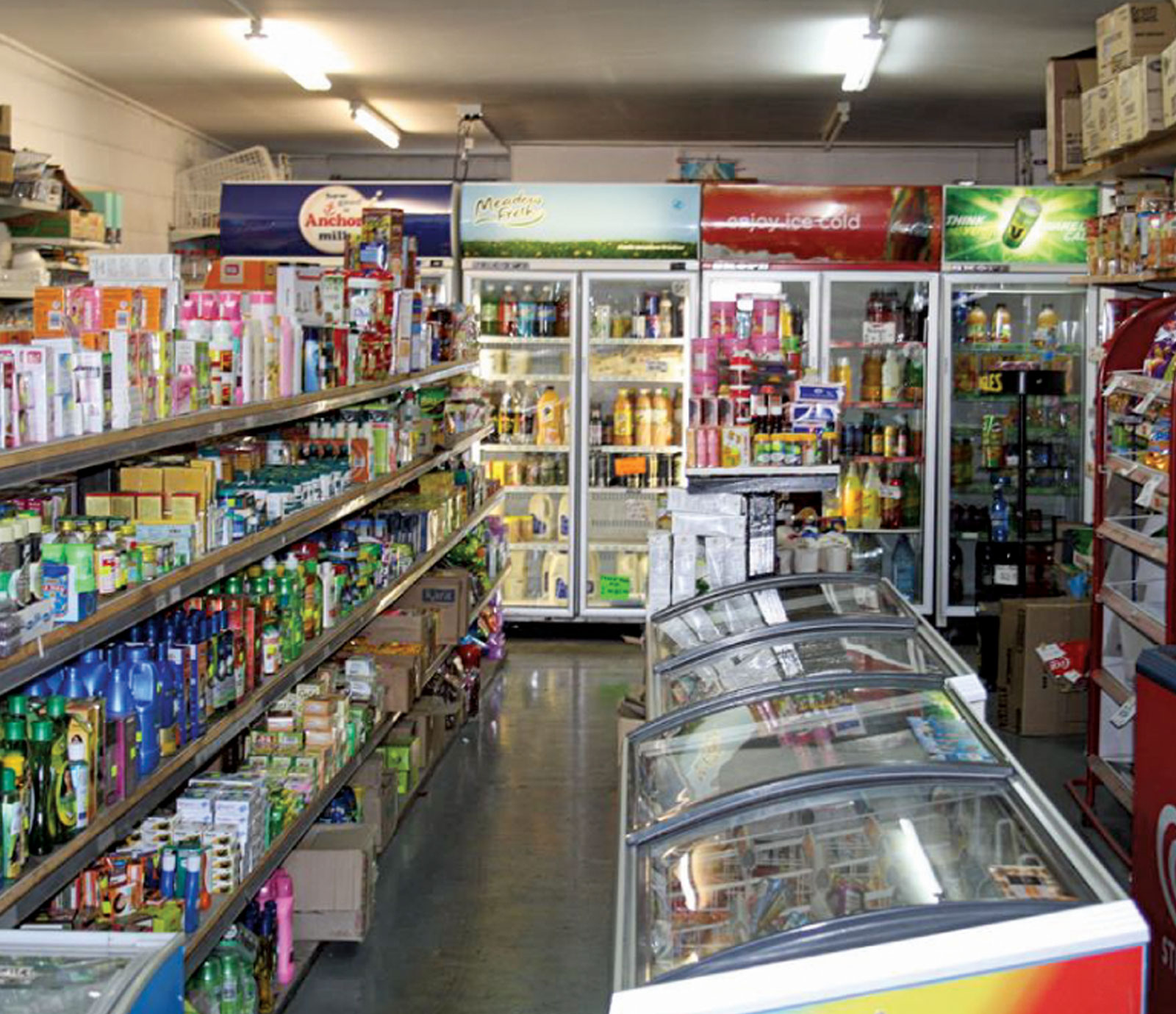
Although these conventional stores are playing an important role in overall retailing business in Pakistan, there are a number of inherent weaknesses in this format. Most of these stores are being operated by semi-literate or illiterate owners who are not exposed to even basic principles of doing business. Some of these shops do have basic merchandising mostly by way of posters, buntings and low cost availability flags though most of such outlets do not have even elementary POP material. Such state of affairs clearly reflects major gaps regarding the profile of this retail channel particularly the calibre of shop operators and degree of merchandising at these outlets. Such gap analysis leads us to opportunities identification but surprisingly FMCG companies are not taking meaningful advantage of such a situation. Their point of contact with these stores, by and large, remains the salesman/delivery boy of a third party appointed by the company for the area.
How Fast Pakistan is Moving Towards Modern Retail?
As mentioned above, we talk about the increasing role of modern trade in the retailing sector of the country as well as its impact on traditional trade. The strong argument behind such comments is the emergence of modern retail outlets since year 2000 including Makro, Metro (now combined entity), Carrefour (read HyperStar) and self-service local supermarkets/chains of supermarkets (Imtiaz, Naheed, HKB, Al Fatah etc.). Despite this noise about modern trade, the fact remains that traditional trade dominates the retail landscape of Pakistan contributing more than 90% of overall retail business. The Economist Intelligence Unit report titled 'Retail 2022' (published in 2012) forecast that modern trade in Pakistan will remain under 10% even by 2020.
The opening of hyper stores offering multiple products is definitely big news but its impact on the overall retail business of Pakistan may be in decimal only. Bottom line is that the so-called traditional retail formats will continue to dominate the retail landscape in the foreseeable future.
Pakistan - One of N11 & Ten Hidden Heroes
Being the third largest sector and second biggest employer, the future prospects of retailing are directly linked with the economic performance of the country in coming years. As the past performance of the retailing sector is better than that of the country as a whole, we can reasonably assume that this trend will not only continue but may accelerate primarily due to huge opportunities in this segment.
Despite such not-so-promising indicators, we need to consider other factors including market size, general resilience and broad ease-to-do-business culture that will continue to play a positive role in economic growth acceleration. In 2011, Deloitte identified Pakistan as one of 'Ten Hidden Heroes' - retail sectors of emerging economies with huge growth potential (Hidden Heroes - The Next Generation of Retail Markets' published jointly by Deloitte and PlanetRetail). In his 2011 book "The Growth Map", Goldman Sachs' Jim O'Neill reiterated Pakistan's long term growth prospects as part of the Next 11 (N-11) group of nations which includes Bangladesh, Egypt, Indonesia, Iran, Mexico, Nigeria, Pakistan, Philippines, Turkey, South Korea, and Vietnam.
If the world looks at Pakistan as 'great opportunity' in general and for retailing in particular, we Pakistanis need to ensure that the process is accelerated by providing required enablers for the purpose. It is not the sole responsibility of the government; private investors, both local and international, may reap the benefits by entering into retailing business and make it more 'organized and modern'.
Implications for FMCG Companies
The current retailing scenario and future prospects have lot of implications for all stake-holders though we will focus here on FMCG companies only happen to be major beneficiaries and users of retail networks. The important points for such companies include:
There is a serious issue of knowing exactly the size of the retail universe in general and FMCG retail universe in particular. Only large companies can afford to subscribe outlet census, especially customized ones, conducted by research firms (eg. Nielsen, Access Retail). Small to midsize FMCG companies need to get generic channel wise outlet data from research companies in order to have a better understanding of target outlets.
Periodic retail audit, provided by research firms, is a great tool particularly for large FMCG companies. However, small and mid-sized companies also need to know their existing and potential outlets through secondary sales tracking systems.
FMCG companies need to segment retail outlets based on shop profile, socio economic level of shoppers, product availability etc.
Segmented marketing initiatives are more focussed and likely to produce specific desired results.
Increasing share in existing outlets and adding more shops result in enhanced market share.
Go for Low Hanging Fruits
So there are huge retailing opportunities in Pakistan but the question is; where to start from. There is massive dollar value attached if someone taps only part of this opportunity. I will mention low hanging fruits for two players only i.e. FMCG companies and large scale retailers.
FMCG companies need to 'connect' with small retailers as well instead of focussing on top-end retailers only. This 'connection' has to go beyond simple trade promotions and pasting of posters to publicize their own products. Loyalty programs at massive scale and bringing cost effective but useful POP materials are needed in order to have a meaningful relationship between FMCG companies and retailers. Companies' marketing team should be actively visiting retail outlets in order to have first-hand understanding of 'Moment of Truth'. Large companies need to allocate resources for retailers training either directly or through financing establishment of retail academies.
Large scale retailers, on the other hand, can take advantage of retailing opportunities in Pakistan by playing an active role in making unorganized outlets into organized ones. For that purpose, chains of neighbourhood stores can be created by giving a certain brand name to these stores. Once the existing independent general/kiryana stores are brought to an organized setup of a chain of stores under some franchise arrangement, the independent owners will be getting benefits of formal training, supply chain facilitation, centralized pricing & promotions arrangements with FMCG companies and the like.
Retail landscape of Pakistan will not change drastically with the addition of modern retail outlets at current pace. The route to organized retailing is to change the profile of existing mom and pop stores.