Search here
 Log In
European Union
A Peaceful Europe
The Beginning of Cooperation
The European Union was set up with the aim of ending the frequent and bloody wars between neighbors, which culminated in the Second World War. As of 1950, the European Coal and Steel Community began to unite European countries economically and politically in order to secure lasting peace. The six founder members were Belgium, France, Germany, Italy, Luxembourg and the Netherlands. Denmark, Ireland and the United Kingdom joined the European Union on 1 January 1973, raising the number of member states to nine.
The short, yet brutal, Arab-Israeli war of October 1973 resulted in an energy crisis and economic problems in Europe. In 1981, Greece became the 10th member of the EU and Spain and Portugal follow five years later. In 1986 the Single European Act was signed. This was a treaty which provided the basis for a vast six-year programme aimed at sorting out the problems with the free-flow of trade across EU borders and thus created the ‘Single Market’.
There was a major political upheaval when, on 9 November 1989, the Berlin Wall was pulled down and the border between East and West Germany was opened for the first time in 28 years, this lead to the reunification of Germany when both East and West Germany were united in October 1990. With the collapse of communism across Central and Eastern Europe, Europeans became closer neighbors. In 1993 the Single Market was completed with the 'four freedoms' of: movement of goods, services, people and money. In 1995 the EU gained three more new members, Austria, Finland and Sweden. A small village in Luxembourg gave its name to the ‘Schengen’ agreements that gradually allow people to travel without having their passports checked at the borders.
In January 1999 euro became the new currency for many European countries. 11 September 2001 became synonymous with the 'War on Terror' after hijacked airliners are flown into buildings in New York and Washington. EU countries began to work much more closely together to fight crime. The political divisions between east and west Europe were finally declared healed when no fewer than 10 new countries join the EU in 2004, followed by two more in 2007. A financial crisis hit the global economy in September 2008, leading to closer economic cooperation between EU countries. The all EU countries ratified Treaty of Lisbon before entering into force on 1 December 2009. It provided the EU with modern institutions and more efficient working methods.
EUROPEAN UNION - One Market Without Borders
In the EU's single market (also called the 'internal market') people, goods, services and money can move around the EU as freely as they do within a single country – instead of being obstructed by national borders and barriers as they were in the past.EU citizens can now study, live, shop, work and retire in any EU country. Or we can stay at home and enjoy a vast array of products from all over Europe.
No more national barriers
To create this unified market, hundreds of technical, legal and bureaucratic barriers that used to stifle free trade and free movement between the EU's member countries have been abolished, generating 2.77 million extra jobs and growth of 2.1% between 1992 and 2008.Free to do business across the entire economic bloc, companies have expanded their operations, with the resultant competition both bringing down prices and increasing consumer choice. Phone calls in Europe cost a fraction of what they did 10 years ago, many airfares have fallen significantly and new routes have opened. Many homes and businesses are now able to choose who supplies them with electricity and gas. At the same time, the EU works to ensure these greater freedoms don't undermine fairness, consumer protection or environmental sustainability – aided by Europe's various competition and regulatory authorities.
A huge business opportunity
European firms selling in the EU have unrestricted access to nearly 500 million consumers – giving them a solid basis for staying competitive in the world economy. Not to mention the attraction of such a vast unified market for foreign investors. And economic integration can be a valuable defence against periodic recessions, allowing EU countries to continue trading with one another rather than resorting to narrow protectionist measures that would worsen the crisis. Skilled professionals can work anywhere in the EU.
External border controls
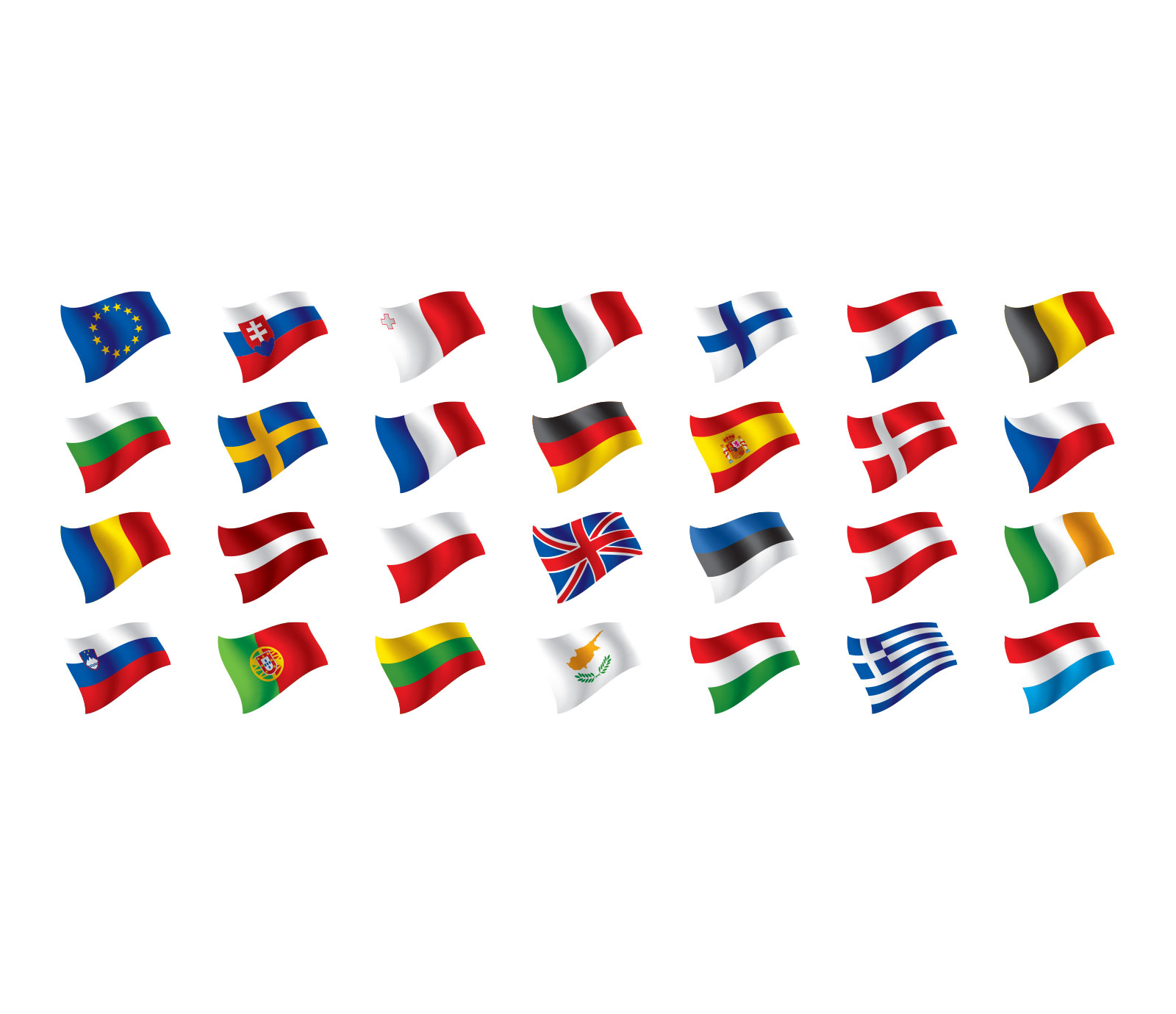
The Schengen area is a space without internal borders. It currently comprises 26 countries:
Norway, Iceland, Switzerland and Lichtenstein and all the EU member countries accept the UK, Ireland, Bulgaria, Romania, Cyprus and Croatia.
The Schengen countries no longer carry out border checks at their internal borders but have stepped up controls at their external borders.
To ensure safety within the border-free area, these countries have also increased police cooperation, in particular through hot pursuit and cross-border surveillance. The Schengen Information System allows national border control, customs and police authorities to circulate alerts about wanted or missing people or stolen vehicles and documents.
EUROPEAN UNION - Pakistan Trade Relations
Pakistan is a major beneficiary of the trading opportunities offered by the EU. From January 01, 2014 The European Union (EU) has granted Generalized System of Preferences (GSP) Plus status to Pakistan, granting Pakistani products a duty free access to the European market. Pakistan benefits from generous tariff preferences (mostly zero duties on two thirds of all product categories) under GSP+ arrangement aiming to support sustainable development and good governance. In order to maintain GSP+, Pakistan has to keep ratification and effectively implement 27 core international conventions on human and labor right, environmental protection and good governance.
EU GSP Plus Scheme
The primary objective of the Generalized System of Preference, commonly called GSP is to contribute to the reduction of poverty and the promotion of sustainable development and good governance. Tariff preferences in the EU market enable Developing Countries to participate more fully in international trade and generate additional export revenue to support implementation of their own sustainable development and poverty reduction policy strategies. The European Union’s GSP covers three separate regimes; (i) The standard GSP, which provides preferences to 90 (previously 177) Developing Countries and Territories on over 6300 tariff lines; (ii) the special incentive arrangement for Sustainable Development and Good Governance, known as GSP+, which offers additional duty free exports to support vulnerable developing countries (previously 16 now 25 countries – Including Pakistan) in their ratification and implementation of relevant international conventions in these fields, and; (iii) The Everything But Arms (EBA) arrangement, which provides Duty-Free, Quota-Free access for the 50 Least-Developed Countries (LDCs).
Pakistan & GSP Plus status
Pakistan has traditionally been benefiting from the standard GSP regime of the EU and our exports to the EU have been subjected to 20% less duty than the normal MFN duties charged by the European Union. This preferential tariff has helped Pakistani products not only to enter the EU market but also to sustain their share in it. Nevertheless, this also meant that Pakistani products, especially; Textiles and Garments, were facing stiff competition not only from efficient suppliers like; China, India, Indonesia, Thailand and Vietnam but were also at a disadvantage vis a vis exports from LDCs like Bangladesh, which were already accorded duty free access to the EU through the Everything But Arms regime of the EU GSP. Pakistan’s qualification as a GSP Plus beneficiary country would put us in a tremendously advantageous position, as; a) China, Colombia India, Indonesia, Thailand and Vietnam are not eligible for GSP Plus. b) China has also graduated out of the Textile and Garments sections of the standard GSP while India has graduated out of the Textile section of the standard GSP, meaning whereby that imports from China and India will not be benefiting from preferential duties either.2 c) Pakistan will only be the second textile and garment exporting country in the South and South East Asian region which will have duty free access into the EU. Taking the overall economic perspective of Pakistan in view, this opportunity not only promises manifold increase in our exports but would also act as an instigator for; investment, both domestic and FDI, employment generation, inculcation of best practices resulting in enhanced institutional capacity and sustained economic growth.
Some of the products of Pakistan’s interest were already duty free either under MFN or standard GSP i.e. surgical instruments, basmati rice, guar gum, spices, onyx, fans etc, while 75 tariff lines also benefited from the Special Autonomous Trade Preference Scheme for Pakistan. But now under the GSP Plus regime all of the products of Pakistan’s export interest would be entitled to duty free treatment which includes all Textiles, Textiles made ups, bed linen, garments, leather products, footwear, plastics, ethanol, agriculture products and processed food etc.
Pakistan’s inclusion in the EU GSP Plus scheme offers immense benefits in terms of increase in exports. It is no surprise that the main beneficiary of the GSP Plus scheme would be the Textiles and Garments sector; our trade analysts have estimated an overall growth of almost 15% in the combined Textile and Garment sector by the year 2014-15, adding approximately US $ 1.5 billion to the total exports of Pakistan. Similarly; the other sectors of our interest .i.e. leather and leather articles, footwear, plastics, ethanol, fresh and processed fruits etc also have the potential to take advantage of the duty free access and record healthy growth levels.
It needs to be clearly understood that the GSP Plus scheme is a ‘Special Incentive Arrangement for Sustainable Development and Good Governance’. As the name suggests, the scheme has been conceived by the European Union as an incentive to inculcate good governance and sustainable development practices in the developing countries, in order to help them in achieving best practices and moving up the ladder of development. Therefore; the additional tariff preferences provided under the special incentive arrangement for sustainable development and good governance would be granted to those developing countries which; due to a lack of diversification and insufficient integration within the international trading system, are vulnerable .i.e.
- Exports of that country should not exceed 2% of EU’s global GSP imports.
- Seven largest sectors of products contribute more than 75% of its exports to EU.
- It is not a high or upper middle income country, and;
- Has signed, ratified and implemented 27 core International Conventions pertaining to; Human Rights, Labor Rights, Environment, Narcotics Control and Corruption
While the vulnerability criteria pertaining to lack of diversification, low income, low share in EU GSP imports and signing/ratification of the core Conventions are a prequalification for a GSP Plus beneficiary country (which Pakistan fulfills), the implementation of these conventions is the core issue which would ensure Pakistan’s continuity in the GSP plus regime. In this regard the EU has devised a monitoring mechanism and it is expected of the beneficiary countries to fully cooperate in providing information, whereby the EU would gauge the satisfactory implementation of these Conventions, failing which, the country could face withdrawal of GSP Plus status.
Pakistan’s inclusion in the list of beneficiary countries of the EU GSP Plus Scheme promises immense economic benefits, it is incumbent on all the stakeholder, public and private sectors alike, to play their part in ensuring that we continue to benefit from such an opportunity. Since these conventions are primarily related to good governance and pertain to; labor laws and rights, gender rights and equality, protection of the environment, human rights, climate change etc and these being core issues for ensuring sustainable social and economic development of any country, they should auger very high in national priority. In our case, we find ourselves in a fortunate situation whereby we are being acknowledged through the GSP plus Scheme for our own very essential reform process for good governance. We should cease this opportunity with both hands and the private sector should also take ownership of these issues by playing their role in not only inculcating international best practices amongst their members but also play the role of a catalyst in the social and economic development of our country.